
Our Building
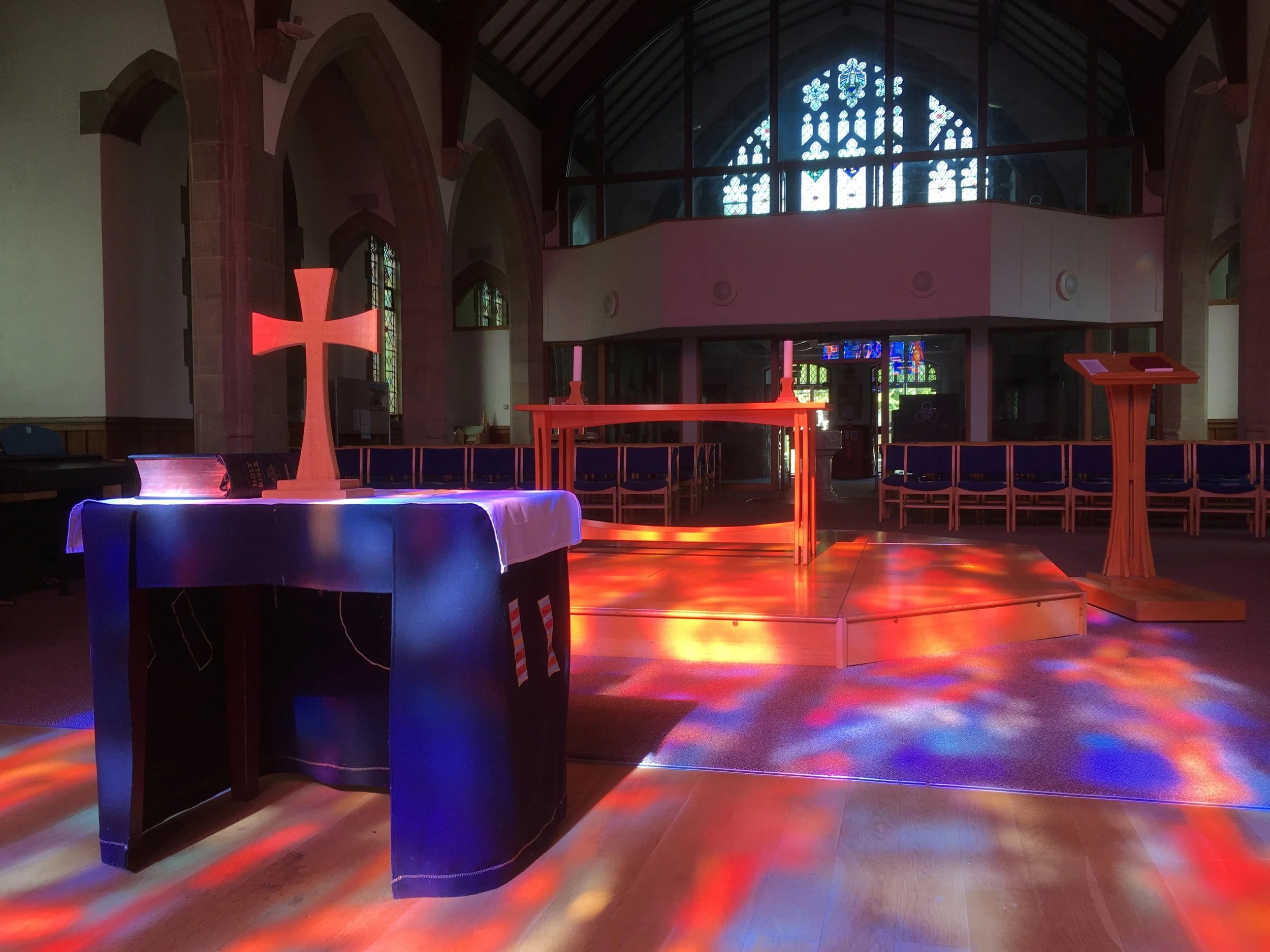
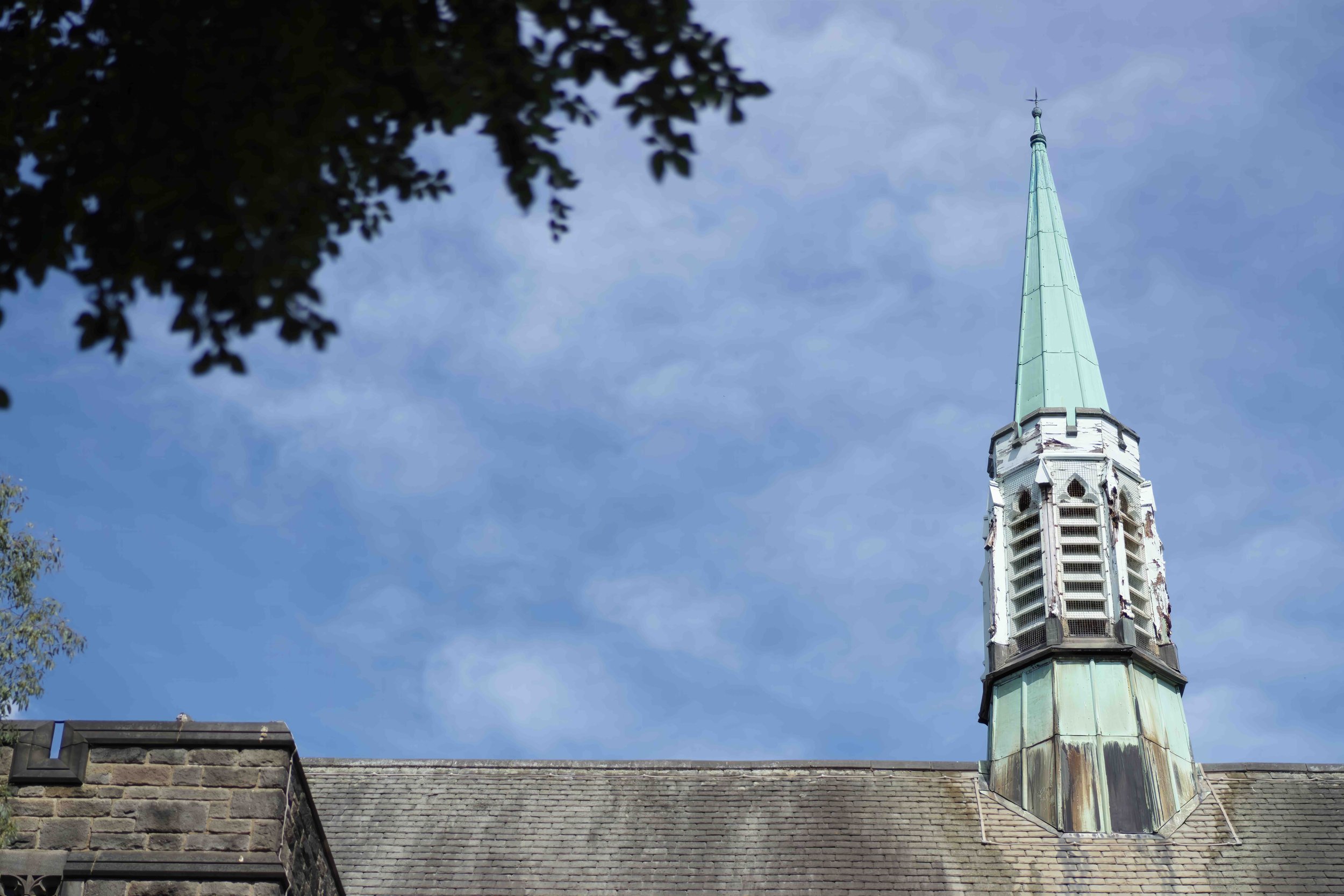
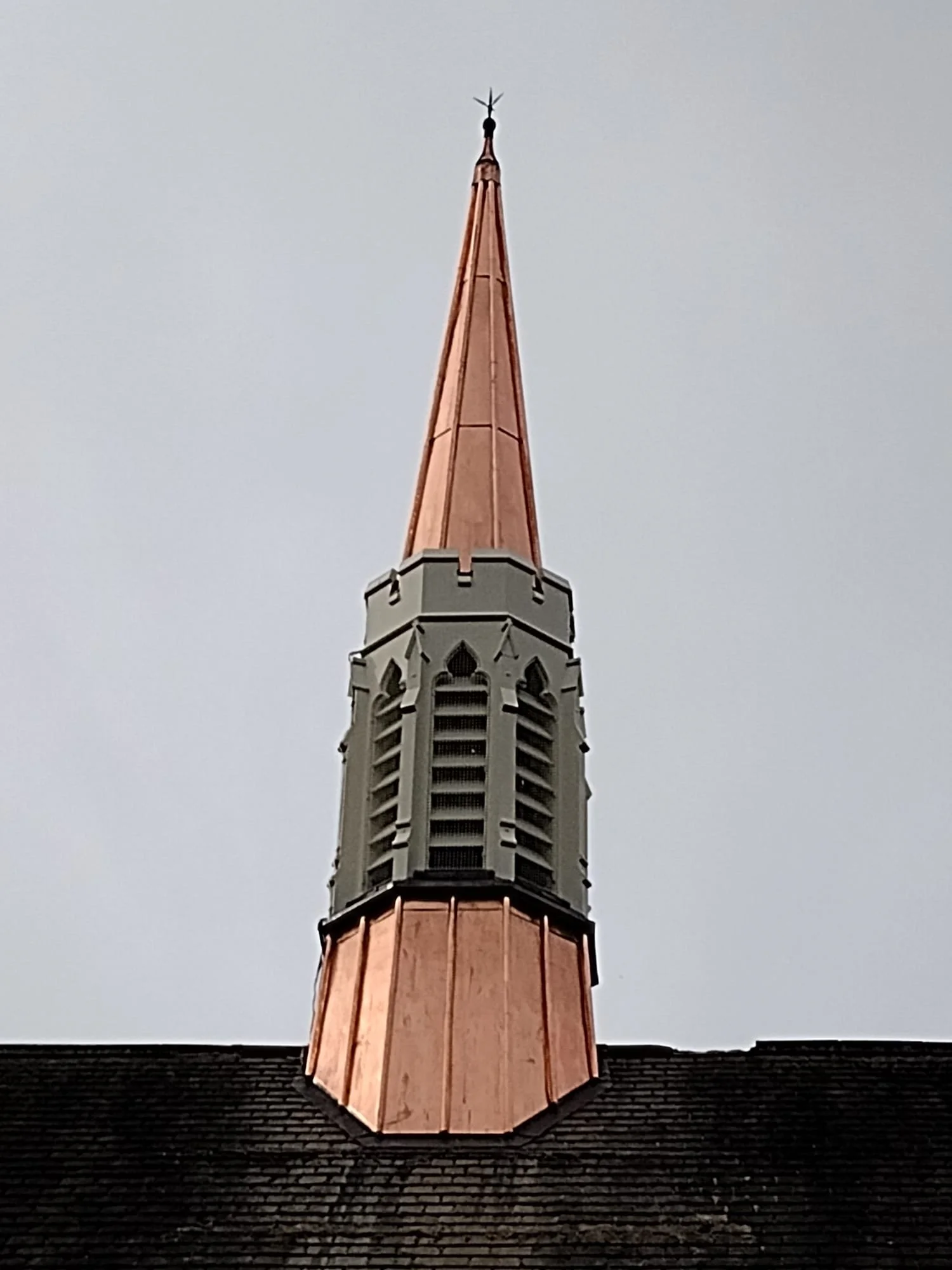
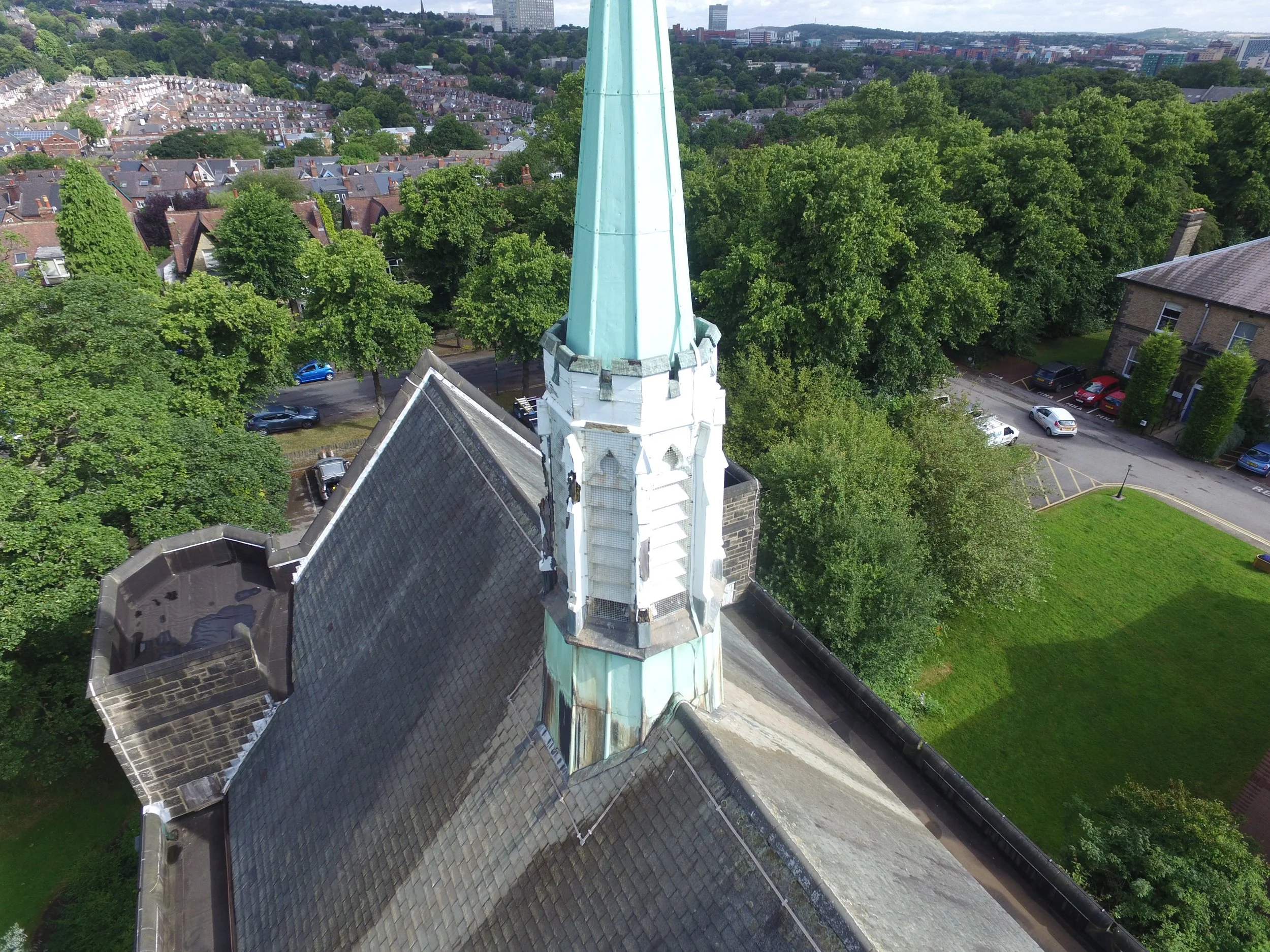
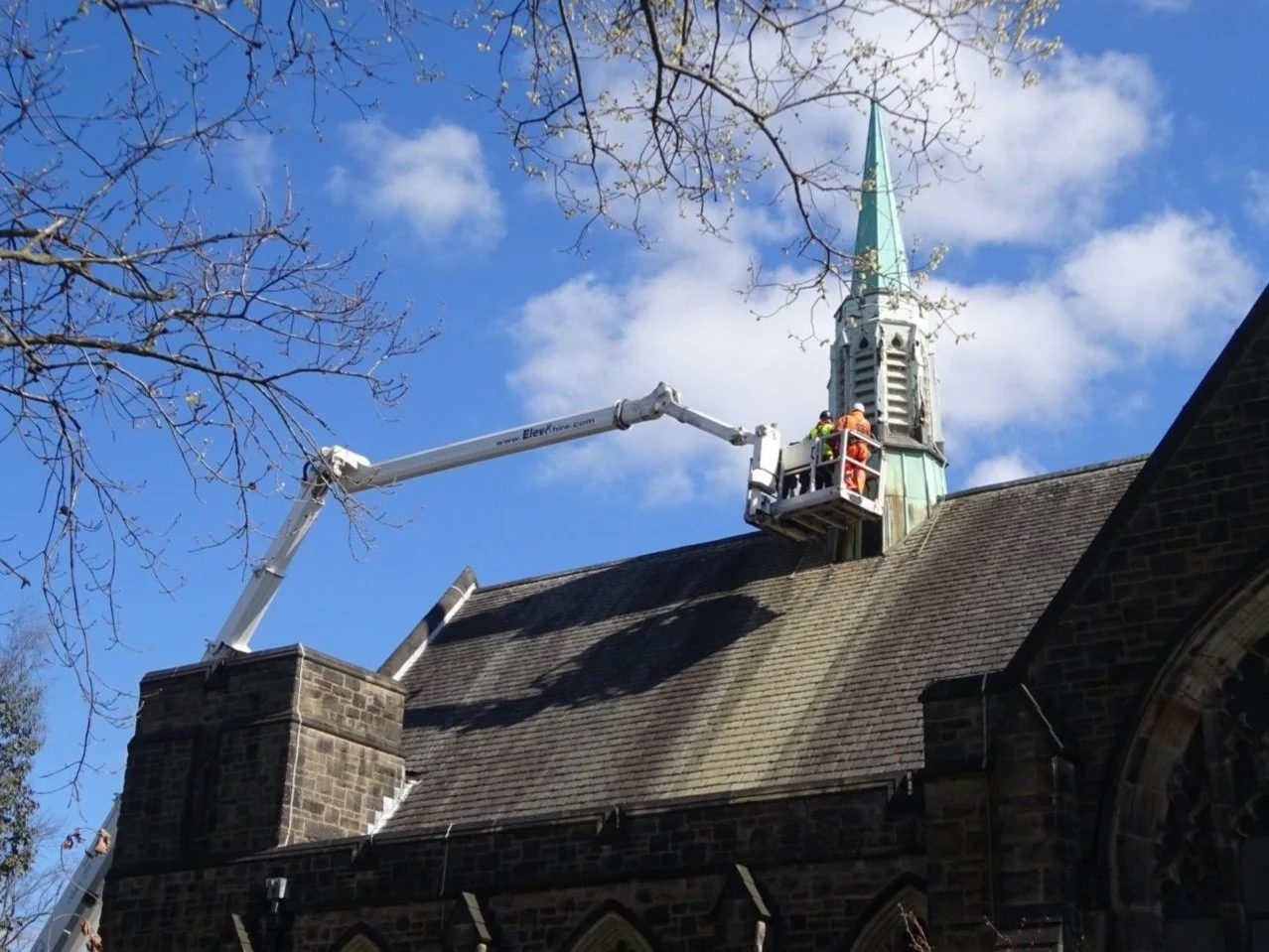
A 1930 Grade II Listed Building
At St Andrew’s Psalter Lane Church, we are proud of our church building and its history. Here you can learn more about its history and significance.
In particular, the New Creation Window, created in 2003 following the unification of the Psalter Lane Methodist and St Andrew’s Sharrow Church of England congregations.
History of the building
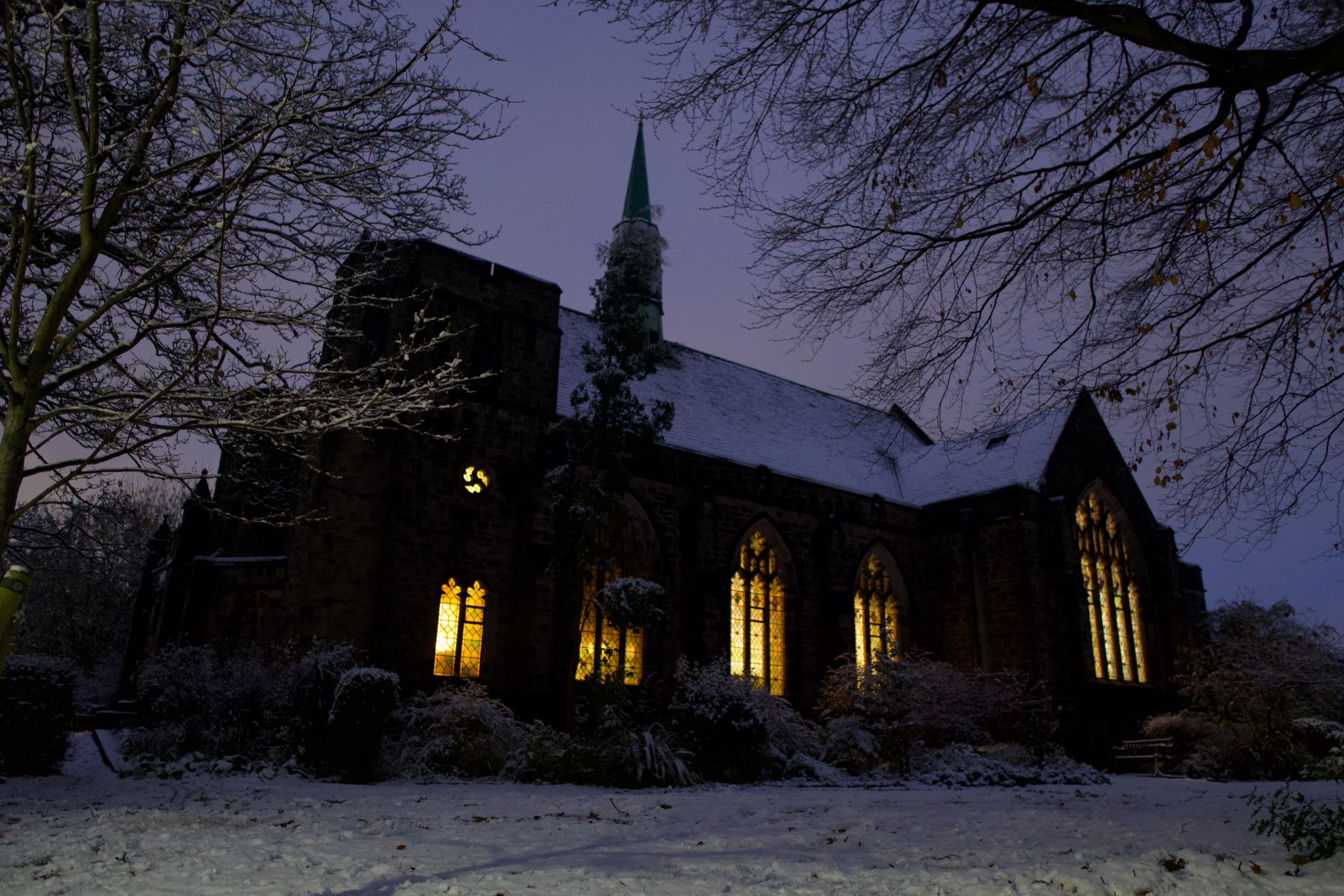
Psalter Lane Methodist Church (the present St Andrew’s Psalter Lane Church building) was dedicated in 1930. When South Street Methodist Church, off the Moor, was bought by Marks and Spencer, the congregation bought Shirley House and the adjoining land on the corner of Psalter Lane and Cherry Tree Road and built a new church there. A well-built cruciform church, it could seat almost 400.
St Andrew’s Sharrow, the Anglican parish church on St Andrew’s Road, was dedicated in 1869 to meet the growing needs of the Victorian suburb. It was a fine church, built on the brow of the hill, with a capacity of 700 and a stone spire which could be seen for miles around. Unfortunately, it had almost no foundations, and towards the end of the 20th Century the nave and transepts had begun to crack alarmingly, as the mudstone on which the church was built dried out. By the end of 1996 the church was no longer safe to use and the congregation moved into the Church Centre (now St Andrew’s Hall).
For many years there were good relations between St Andrew’s Sharrow and Psalter Lane Methodist Church, with many shared services and events. In 1997 the Methodist congregation invited the congregation of St Andrew’s Sharrow, who now had no building, to join them; the invitation was accepted and after much prayer and planning, the two churches became one, as St Andrew’s Psalter Lane Church, in January 1998. Technically, the church is a Local Ecumenical Partnership (LEP) and is sponsored and regulated by Churches Together in South Yorkshire on behalf of the two parent denominations.
The old St Andrew’s Sharrow parish church was demolished in 2000 and the land sold - the Monarch’s Gate apartments were built on the site. The proceeds of the sale were used towards a major redevelopment of the now shared Psalter Lane Methodist Church building; the project was designed by Peter Wright of the architects Peter Wright and Martin Phelps, and was carried out by T&C Williams in 2002-3. The result of the development is the calm, intimate, comfortable, flexible and inspiring church interior we have today.
Looking around St Andrew’s Psalter Lane Church
As you approach the church from Psalter Lane and climb the steps, or after you have walked slowly up the ramp, admiring the plants and flowers in the garden on the way, you come to the glass doors which have the church’s trinitarian logo etched on them; you can already see the New Creation window, created for us by stained-glass artist Rona Moody in 2002-3, and the glowing colours invite you in. As you pass through the porch, look up to your left and right to see the stone symbols of the trinity which inspired our new logo.
Continue into the narthex, a bright carpeted area where people can meet and greet each other, drink tea and coffee and share in conversation. To the left is the kitchen with its serving hatch and to the right is a special area for small children, where the service is piped in so parents don’t have to miss out! The children’s room is separated from the narthex by the William Morris window from the old parish church – the other Morris window is displayed at the Psalter Lane site of Clifford All Saints Church of England Primary School. There are also gender-neutral and disabled-access toilets in the narthex.
Before entering the main worship area, why not go up the stairs from the narthex to the beautiful long balcony room, dominated by the North window of the church? This is the Choir Vestry, but can also be used as a pleasant meeting room. As you go out onto the balcony itself, from where the sound system is controlled, feel energised by the brilliant colours of the New Creation window in front of you – if the sun is shining, you can’t miss the many reflections on walls, floor and dais. Enjoy the feeling of space and light as you take in the inclusive intimacy of the church, with the central communion table on the dais and the chancel arch continuing the circling chairs.
Back downstairs, enter the worship area through the glass doors from the narthex and you will immediately find the font. Set traditionally near the entrance to the church – baptism being entrance to the church community – it balances the communion table which is ahead of you. Sit anywhere you like and realise how comfortable and relaxing, yet somehow stimulating, this space is. If you have picked up one of the information leaflets about the New Creation Window and some ways of meditating as you look at it, you could try this now.
You might want to explore round the back of the church – if you go out to the left, you will first find the minister’s room, then the rooms used by Junior Church during Sunday morning worship. There are also more toilets, a fire escape and the flower arrangers’ room.
The church is usually locked when not in public use but if you would like to visit, this can be arranged by contacting the caretaker on 0114 2553787 or bookaroom@standrewspsalterlane.org.uk.
Light
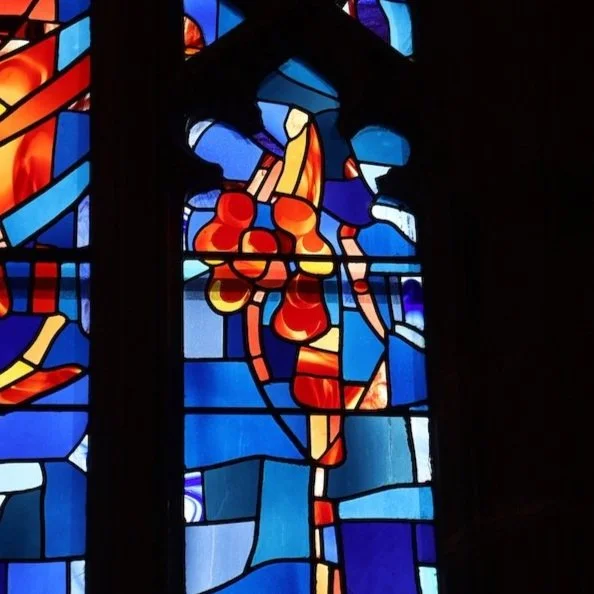
Yeast
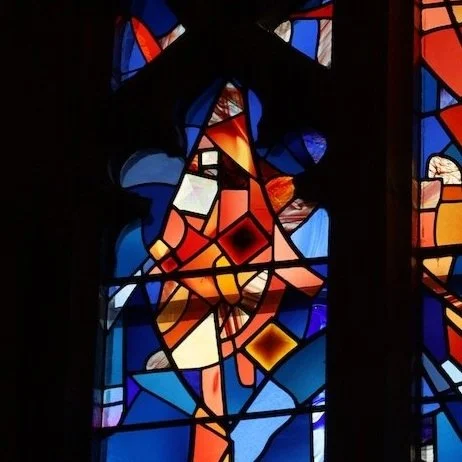
Salt
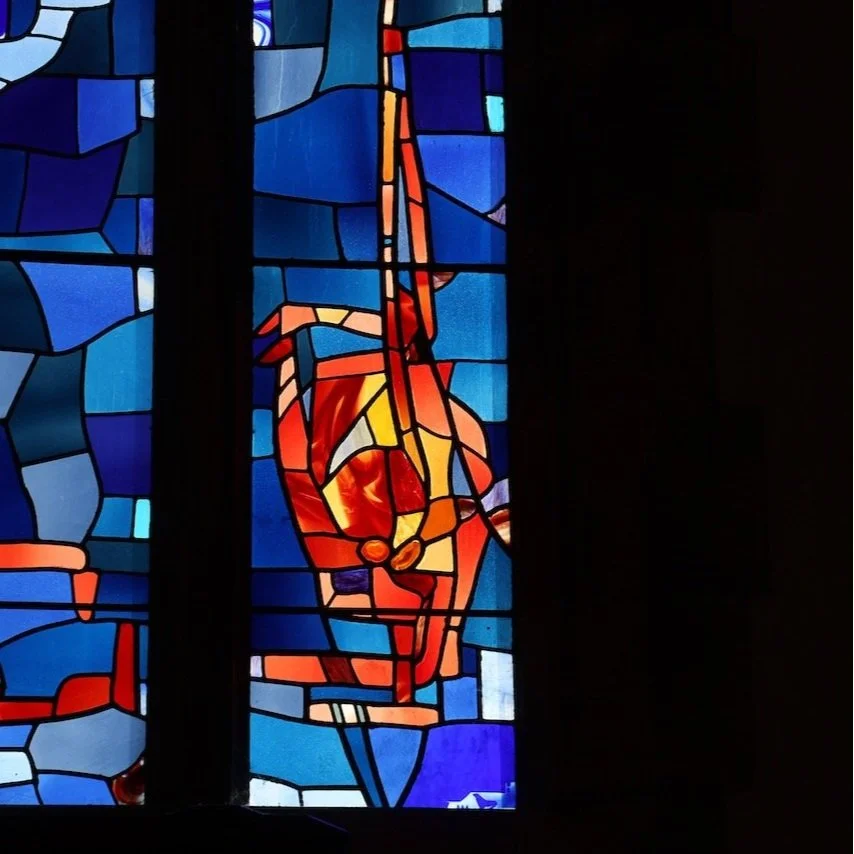
Seeds
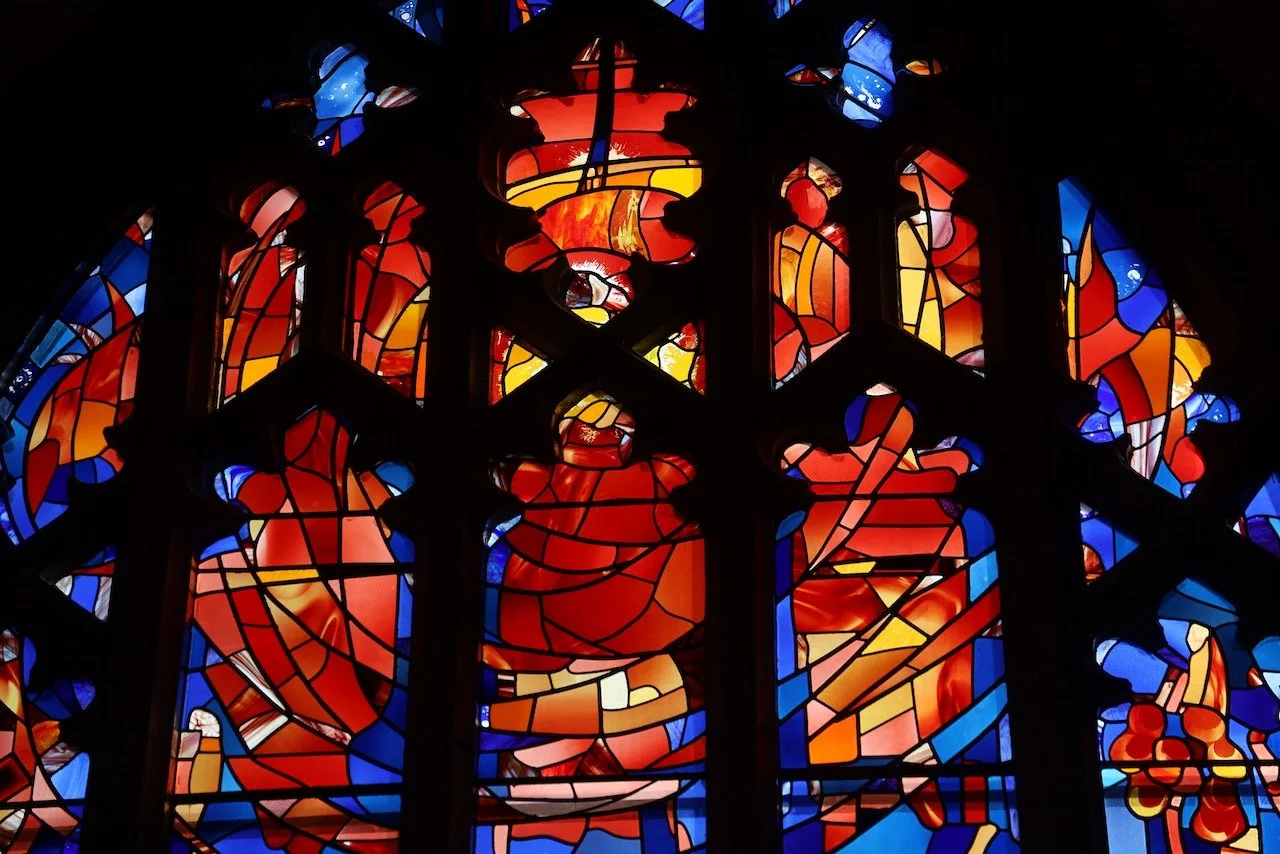
The New Creation Window
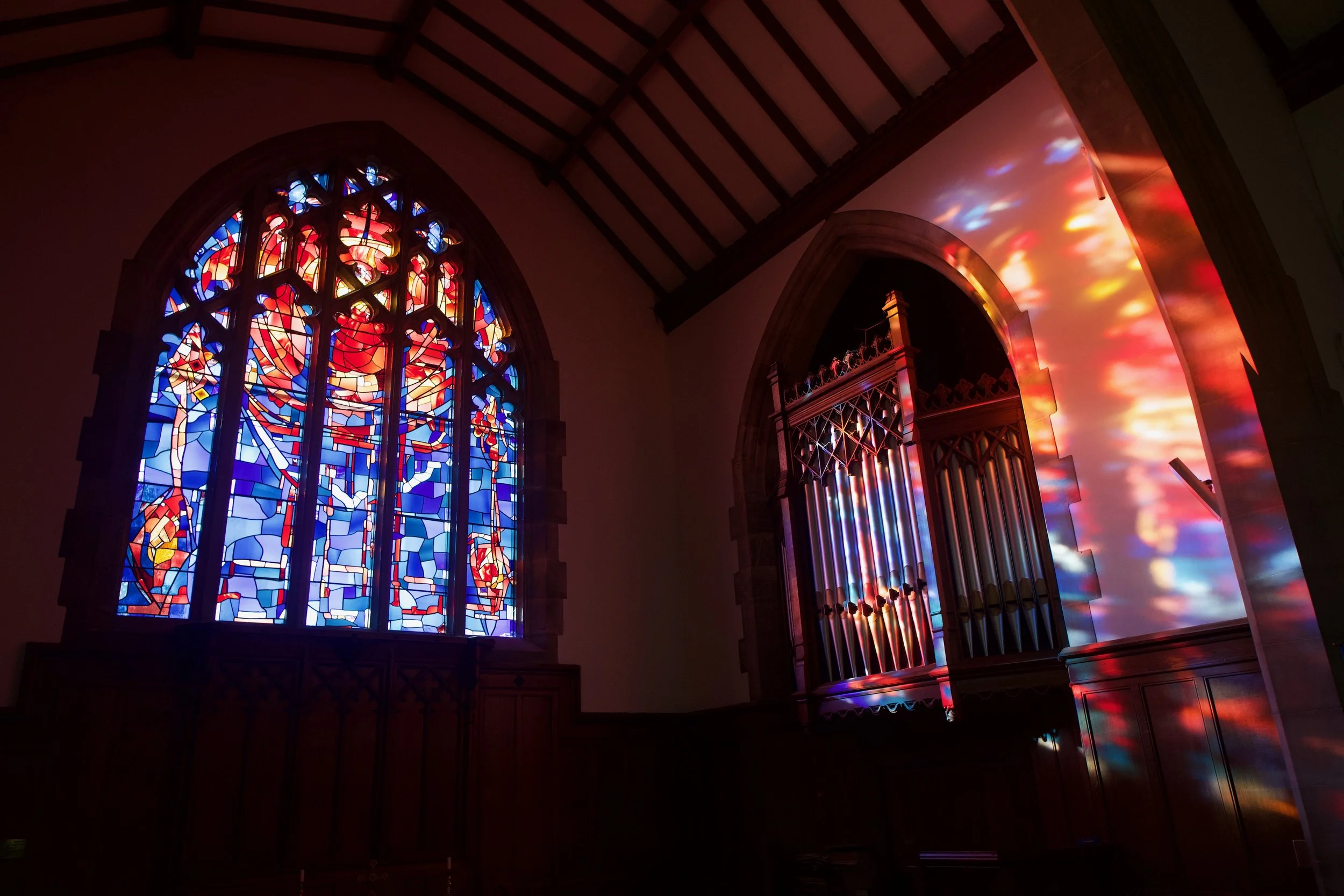
The New Creation window occupies the largest, central window in the nave of the church. It was created for us by stained-glass artist Rona Moody in 2002-3, following the creation of the partnership between Psalter Lane Methodist Church and St Andrew’s Nether Edge Anglican Church.
The window casts beautiful colours across our building and contains symbolisim and emotion for us to focus on during our worship.
Light was the starting point when we were thinking about our new window. We wanted to express the Glory of God as we experience it in the creation and also in the new creation in the resurrection of Christ.
'The light shines in the darkness, and the darkness has never quenched it'
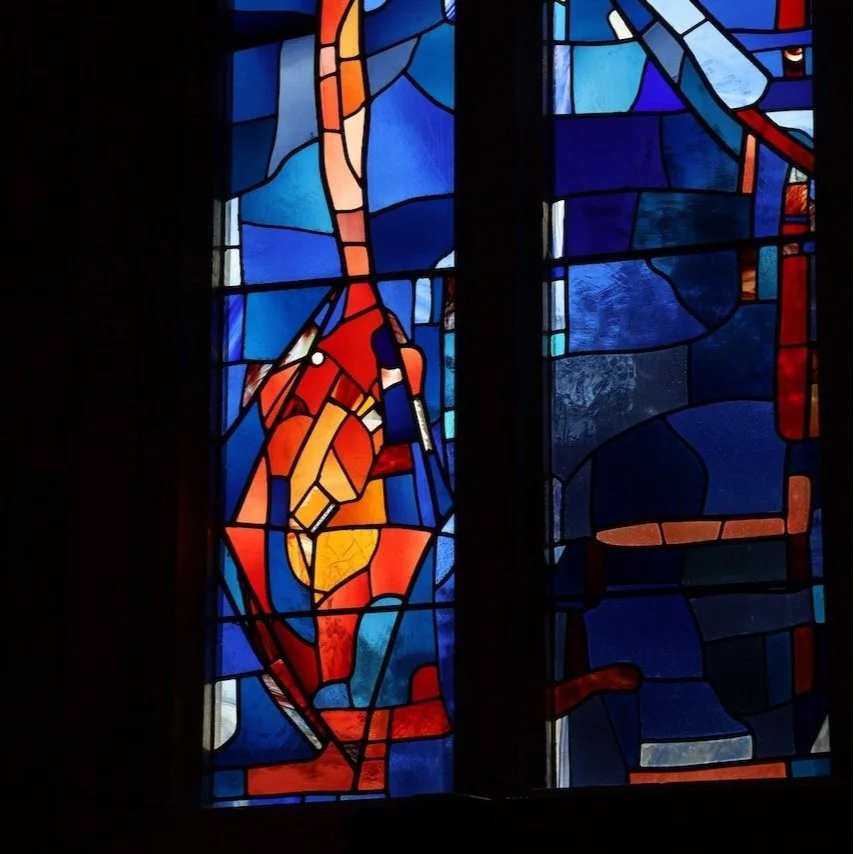
We also chose four symbols of growth and transformation that Jesus used to picture the kingdom of God, and artist Rona Moody included abstract representations of these in the window:
Light 'You are the light of the world'
Salt 'You are the salt of the earth'
We also thought abought the connotations of Psalter Lane, and about the possibility that Jesus did not mean salt as we know it, but rather some kind of phosphate used as a fertiliser.
Yeast 'which a woman took and mixed into three measures of flour until it worked all through the dough'
Seeds There are many parables about sowing, including 'the little mustard seed which grows into a huge tree'
Some suggestions for using the window as a focus for thought, prayer and meditation:
1. Think of the 'Big Bang' at the beginning of time, that inconceivably great explosion of gases that made everything in the universe possible. Around the top of the window you will see images of galaxies and stars, such as the Hubble space telescope has shown us.
'God creates the possibility of possibility'
2. Reflect on the amazing explosion that was the event of Jesus Christ in history: his life, his death and the resurrection which set in motion a whole new faith and understanding of the purposes of God.
Notice that the central lines of tracery, at the very source of light, form a saltire (St Andrew's) cross.
'Christ is the Light of the world'.
3. An idea that was in our minds as we thought about the window was that of the burning bush by which Moses became aware of the holy presence of God.
Look at the great glow at the heart of the window and think of the holiness of God as something powerful, burning and inextinguishable.
'I am who I am'.
4. 'The light shines in the darkness...' - but notice how the light begins to spread through the darkness.
See how the four symbols of the presence of God on earth (salt, light, yeast, seeds) are also diamonds of light, drawing from the true source, which is God in Christ.
Think of churches, individuals and many other groups as light for the world, because they reflect something of God's light.
Notice how the 'dark' parts are never really dark, and there are small patches of light everywhere: The light is ultimately too strong.
5. The window represents light, but the real light, without which the window would be nothing at all, is shining outside - our sun.
All our attempts to represent or understand or approach God are only that - mere attempts: pictures, analogies, 'as-it-weres'. The real God always eludes our human grasp, but the very attempt, even though it fails, reassures us that we are at least encroaching on the outskirts of a huge reality.
'A man that looks on glass, on it may stay his eye, but, if he pleaseth, through it pass, and then the heaven espy' (George Herbert)
6. There is no green in the window - the artist had in mind the blending together of two congregations in our partnership: the blue and the red. So the window is very much about the potential for growth, rather than growth itself: the indispensible light, the yeast that can raise the dough, the seeds with all their potential and the salt which can cause chemical reactions but also, if we think of it as a fertiliser, stimulate growth.
Think of the state of the world, of your community and family, of yourself: where is the potential for growth? Where could the kingdom of God be brought into reality by the energy of the Holy Spirit?
7. (An idea for smaller people!) One of the pieces of glass in the 'Salt' section of the window is a prism and when the light falls just right, it casts a perfect rainbow inside the church. Can you find it?
Think of the story of Noah and the very first rainbow, God's special promise to us.
Think about how the many beautiful colours of the rainbow remind us that God loves us all equally, just like we should love each other.